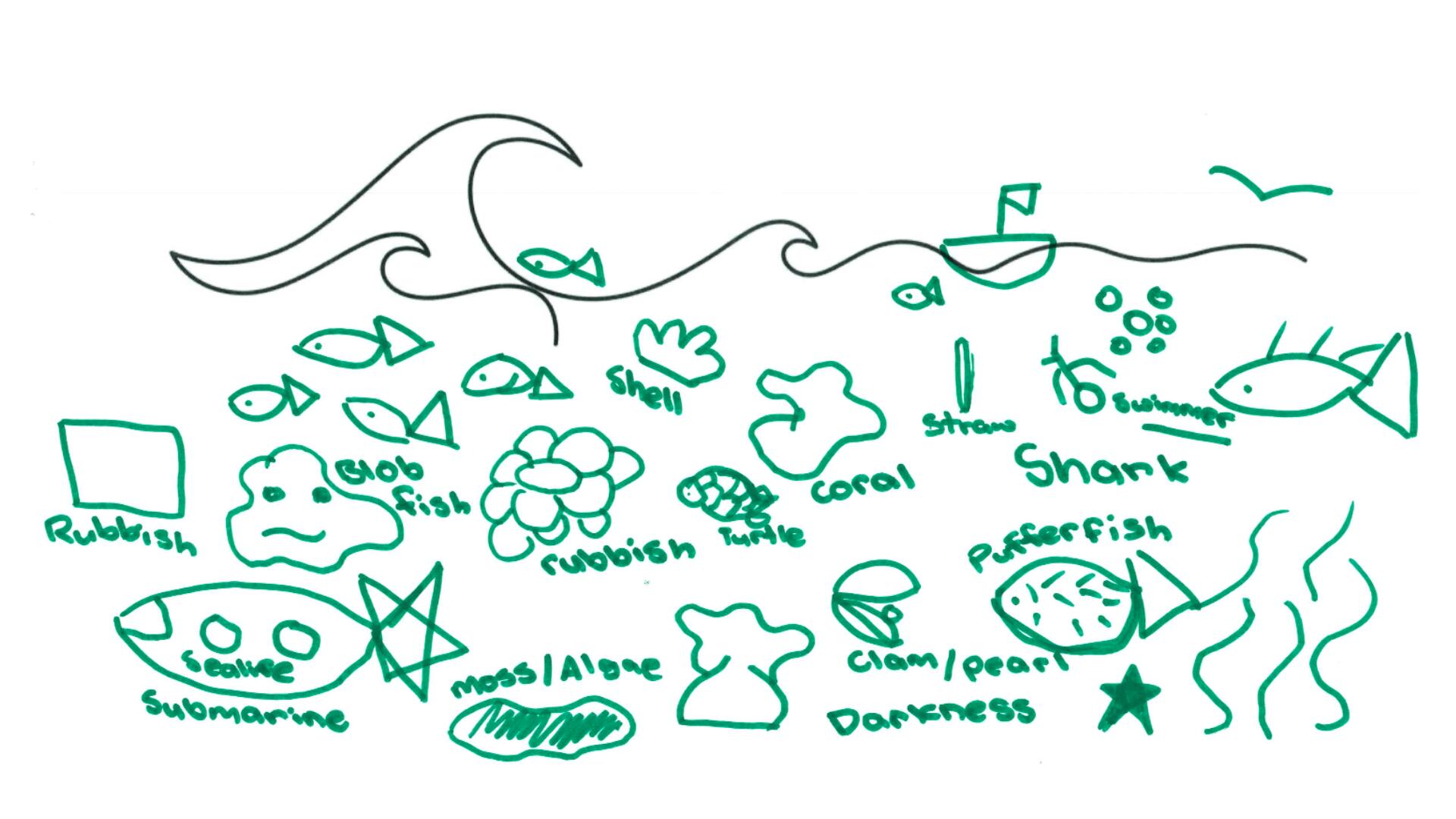
Plenty of stimulus was used to help the tamariki generate deeper responses than you might see in a class setting. This helped build a picture of what might and might not work for children in a gallery, exhibition, programme or learning space.
Research findings
Overall, the findings were reassuring in that they confirmed some of our assumptions and ways of developing content for young people. These included that the ocean is inherently interesting to children; that the online world frames children’s thinking; and that children want to interact with things in real life.
"One thing I love about the ocean is how it, like, connects us as people. The ocean is a big part of all of us, like all cultures in New Zealand." – Y 9-10
We know that tamariki are curious about the moana , but what they understand of it is not learned at school but largely through online content that favours the exotic and extreme. Tamariki have little knowledge about what lives in our part of the ocean, or how everything might connect. As a result, what’s extraordinary in other oceans can feel more important than the extraordinary and vibrant marine life living right here in our backyard.
The research suggests that when tamariki are given the opportunity to explore our local marine world through creative, immersive, and culturally grounded experiences, they light up. That’s why the work of the Maritime Museum, and many other valued organisations in the Auckland region that help tamariki connect to the local moana, is so important. It’s also a strong indication that we’re heading in the right direction.
Where to from here?
From here, the Maritime Museum will use these findings to enrich its learning programmes, exhibitions and gallery spaces, deepening children’s understanding and inspiring ocean citizenship and care for our moana. The museum aims to complement and amplify what tamariki can learn about the ocean and our marine life.
Support for this project gratefully received from

If you would like to get in touch with us regarding this research, please click here or email info@maritimemuseum.co.nz for time sensitive enquiries.