The ocean connects us all. On World Ocean Day, we celebrate the moana and reflect on our role in protecting it. Inspired by Ngā Huhua: Abundance, this article explores Te Moana-nui-a-Toi, Auckland's Big Blue Backyard, and what abundance means for the future of our oceans.
By Kate Waterhouse | 8 June 2026
If you travel by boat to the islands of the outer Hauraki Gulf, you may notice the sea changing colour—from the green waters of the inner Gulf to a deep, oceanic blue. If you're lucky, you'll be joined by a pod of irrepressible, stripey aihe (common dolphins) riding the pressure wave at the bow of your vessel, while gannets and shearwaters gather overhead, waiting for dinner to appear. Below the surface lies another world entirely.
This is Te Moana-nui-a-Toi—world-famous water, just beyond the horizon of Auckland, Aotearoa New Zealand's largest city. More than a quarter of the world's dolphin and whale species have been sighted here. It is a global hotspot for seabirds, with more than 28 breeding species. The area is also recognised as an Important Shark and Ray Area (ISRA), known for encounters with oceanic manta rays, as well as sunfish, seals, turtles and whale sharks.
It is extraordinary water and renowned among marine scientists. Te Moana-nui-a-Toi is named for Toi Te Huatahi, who according was among the earliest navigators to sail these waters around 1250 AD. Following the paths of seabirds and whales from the Pacific Islands, Toi and his people arrived in one of the world's most productive marine environments. For these first arrivals, the sight and sound of countless birds, waters teeming with fish and seals, and large gatherings of whales and dolphins must have been overwhelming.
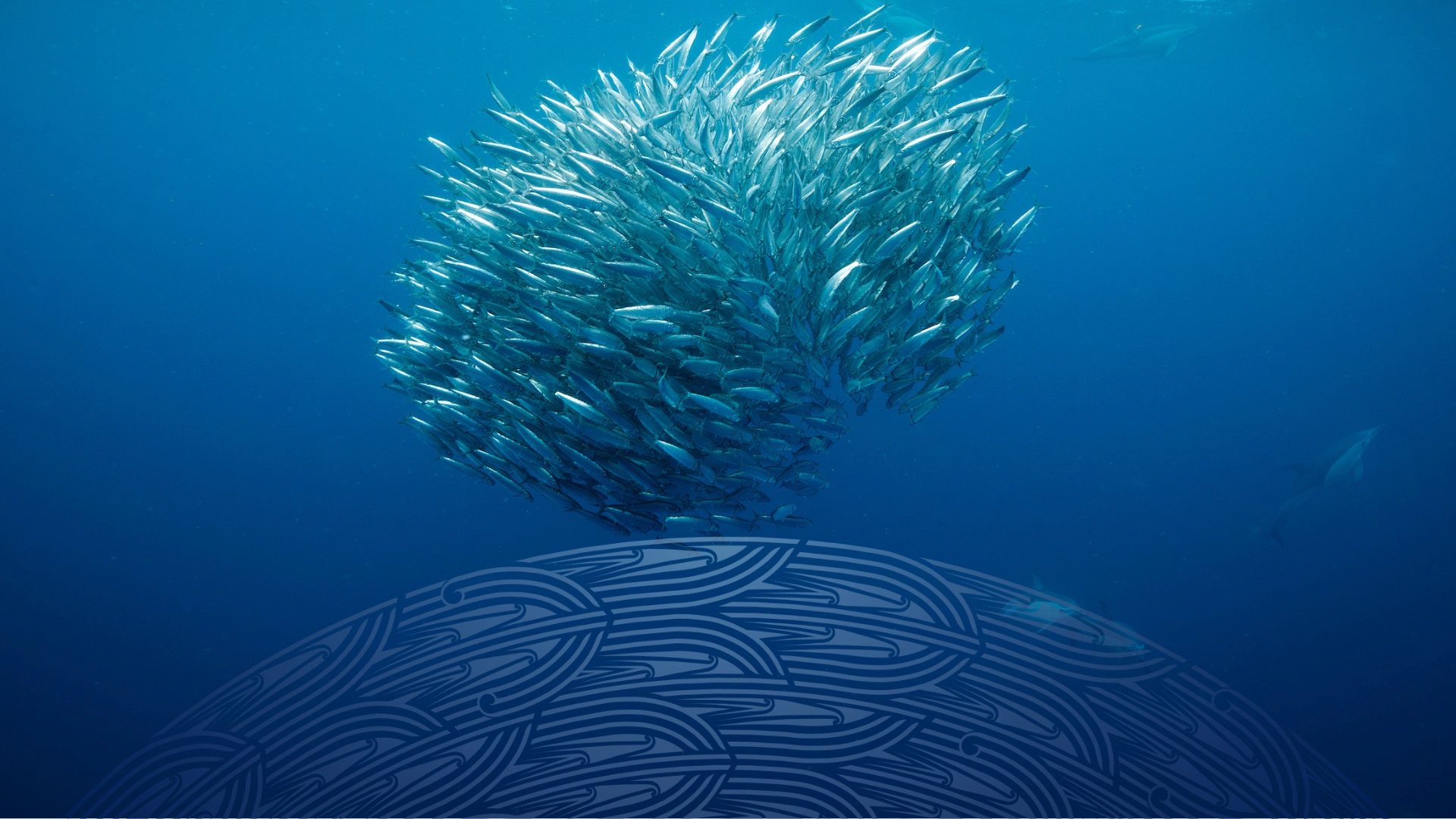
Today, this place still contains all the ingredients for abundance. The combination of islands, seasonal winds, and warm currents mixing with cooler continental shelf waters creates ideal conditions for life to flourish. From microscopic phytoplankton and krill to pygmy blue whales, the food web here supports an extraordinary diversity of species. Fish range from small schooling pilchards to mako sharks, among the fastest sharks in the world.